TECHNOLOGY SKILLS TRAINING THAT BUILDS CAPABILITY - NOT JUST SOFTWARE FAMILIARITY

Constellar designs technology skills and digital upskilling eLearning for global enterprises – going beyond click-through software demonstrations to build the genuine capability your people need to use technology effectively, confidently, and in the context of their actual work.

Our senior instructional designers design around workflows, not feature lists – using AI-assisted production to deliver role-specific, modular technology training at the scale and speed digital transformation programmes demand.

Software Adoption
AI Literacy
Data Skills
Digital Fluency
Productivity Tools
Cybersecurity Basics
Remote Working Tools
ERP & CRM Systems
Software Adoption
AI Literacy
Data Skills
Digital Fluency
Productivity Tools
Cybersecurity Basics
Remote Working Tools
ERP & CRM Systems
Software Adoption
AI Literacy
Data Skills
Digital Fluency
Productivity Tools
Cybersecurity Basics
Remote Working Tools
ERP & CRM Systems
Software Adoption
AI Literacy
Data Skills
Digital Fluency
Productivity Tools
Cybersecurity Basics
Remote Working Tools
ERP & CRM Systems
Software Adoption
AI Literacy
Data Skills
Digital Fluency
Productivity Tools
Cybersecurity Basics
Remote Working Tools
ERP & CRM Systems
Software Adoption
AI Literacy
Data Skills
Digital Fluency
Productivity Tools
Cybersecurity Basics
Remote Working Tools
ERP & CRM Systems
Software Adoption
AI Literacy
Data Skills
Digital Fluency
Productivity Tools
Cybersecurity Basics
Remote Working Tools
ERP & CRM Systems
Software Adoption
AI Literacy
Data Skills
Digital Fluency
Productivity Tools
Cybersecurity Basics
Remote Working Tools
ERP & CRM Systems

Training topics we cover - each one built for your specific technology environment

Technology skills training fails when it teaches every feature rather than every workflow, assumes the same starting point for every learner, and never gets updated when the software does. We design around the actual tasks your employees perform.

Software Adoption & Onboarding

Role-based software adoption training built around the specific tasks employees need to perform - not a vendor feature walkthrough. For ERP, CRM, HRIS, and enterprise productivity tools, where adoption rates determine ROI on the technology investment.

AI Literacy & Responsible Use

Practical AI literacy for non-technical employees - what AI tools can and cannot do, how to use them effectively in their specific role, and how to use them responsibly. Built to demystify AI without requiring technical knowledge - one of the fastest-growing training needs in enterprise organisations.

Data Skills & Analytics

Data literacy training for non-technical employees across commercial and operational roles - covering data interpretation, basic analytics, and the practical use of data in everyday business decisions.

Digital Fluency & Productivity Tools

Training on core digital productivity tools - Microsoft 365, Google Workspace, collaboration platforms - focused on the workflows employees actually use, not all available features. Senior IDs design for productivity outcomes, not feature familiarity.

Cybersecurity Basics For All Employees

Foundational cybersecurity awareness as part of broader digital upskilling - password management, phishing recognition, secure data handling, and the specific security practices relevant to each role.

Remote & Hybrid Working Tools

Training on effective use of virtual collaboration tools - Teams, Zoom, Miro, Slack - covering meeting facilitation, async communication, and the digital team dynamics that remote working requires.

ERP & CRM System Training

Simulation-based training for ERP and CRM adoption - learners practise real transactions and workflows in a safe environment before working in the live system, reducing errors and accelerating competency at rollout.

Emerging Technology Awareness

Training that keeps your workforce current on emerging technology trends - AI, automation, data privacy, blockchain - relevant to your industry, your strategic priorities, and your employees' specific roles.
Cybersecurity Training Topics

Don’t see your specific technology topic? We design for the full range of digital upskilling and technology capability challenges – contact us.

CONTACT US

The real challenges of technology skills training - and why most programmes miss them

Software training that shows features, not workflows

Most software adoption training is built by vendors to demonstrate product features - not to build employee capability for specific job roles. When training does not reflect the actual workflow an employee needs to perform, it produces feature awareness, not productivity.

Mixed-ability audiences and one-size delivery

Technology skills training for a workforce with mixed digital confidence needs multiple entry points. A programme that assumes too much prior knowledge frustrates low-confidence learners. One that assumes too little disengages those who are already digitally capable.

Technology evolves faster than training can keep up

Enterprise software updates quarterly. AI tools evolve monthly. Training built around a specific version is outdated within months of deployment - without a modular architecture designed for rapid updates.

What technology skills training should actually produce - The outcomes we design for

Technology training succeeds when it produces capability – not just familiarity. Our senior IDs define these outcomes before a single module is built.

WHAT GOOD TRAINING PRODUCES

  • Employees perform their specific job tasks using the target technology – not just navigate the interface
  • Low-confidence digital learners gain genuine technology confidence through progressive skill building
  • Employees understand what AI tools can and cannot do in their role – and use them responsibly
  • Software adoption rates improve because training reflects real workflows
  • Training remains current when software updates
  • Employees have access to just-in-time support on demand for specific tasks

HOW DO WE DESIGN FOR IT

  • Role-based workflow training designed by senior IDs – built around actual tasks, not the full feature set
  • Multiple entry points with senior-designed progression pathways – not a single one-size programme
  • Role-specific AI literacy designed by senior IDs – practical and responsibility-focused, not technically overwhelming
  • Workflow-first training design – senior IDs map job tasks before content is developed; AI-assisted production builds at scale
  • Modular architecture designed by senior IDs for independent module updates – AI-assisted production makes refreshing specific modules fast
  • Performance support tools designed alongside primary training by senior IDs – AI-assisted production keeps them current

How we think about technology skills training - The design principles that make the difference

Technology training must reflect actual job workflows, not software features.

The most effective software adoption training teaches specific tasks an employee needs to perform – using the workflows of their job, not the complete feature set of the application. Our senior IDs map job tasks before content is developed. AI-assisted tools then help us build workflow-specific training content efficiently across multiple role types; senior expertise ensures every workflow accurately reflects the actual task.

AI literacy is the emerging capability gap and it requires a different design approach.

AI literacy for non-technical employees needs to be role-specific and outcome-focused – not a generic AI overview or a technical deep-dive. Our senior IDs design AI literacy training around the specific AI tools relevant to each role, the use cases that apply, and the responsible use decisions employees need to make. AI-assisted production supports development at the scale enterprise AI literacy programmes require.

Mixed-ability design requires multiple entry points, not a single programme.

A digital upskilling programme for a workforce with mixed confidence levels needs a pathway architecture – foundational modules, advanced content, and a structure that does not force all learners through the same content at the same pace. Senior IDs design the pathway architecture; AI-assisted tools support content development across the full capability range.

The learning approaches that work best for technology skills training

AI-assisted production is particularly relevant to technology skills training – AI tools help us build realistic software simulations, develop scenario variants across multiple role types, and keep modules current as software evolves. Senior IDs design the learning architecture and workflow accuracy; AI accelerates production at the scale enterprise technology training requires.

The impact we create, through the eyes of our clients.
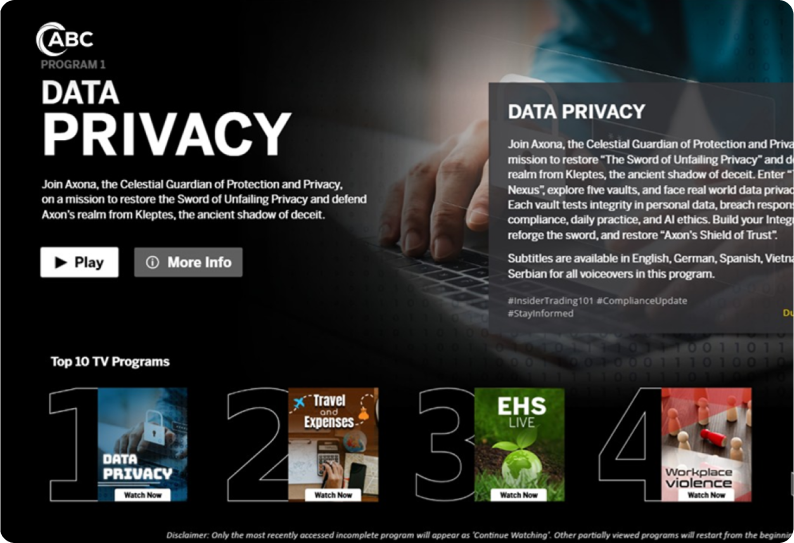
Technology skills training across industries
How the challenge changes by sector

Strategic capability needs vary significantly by industry context, competitive environment, and organisational maturity. We design strategy training that reflects your specific priorities – not generic business school frameworks.
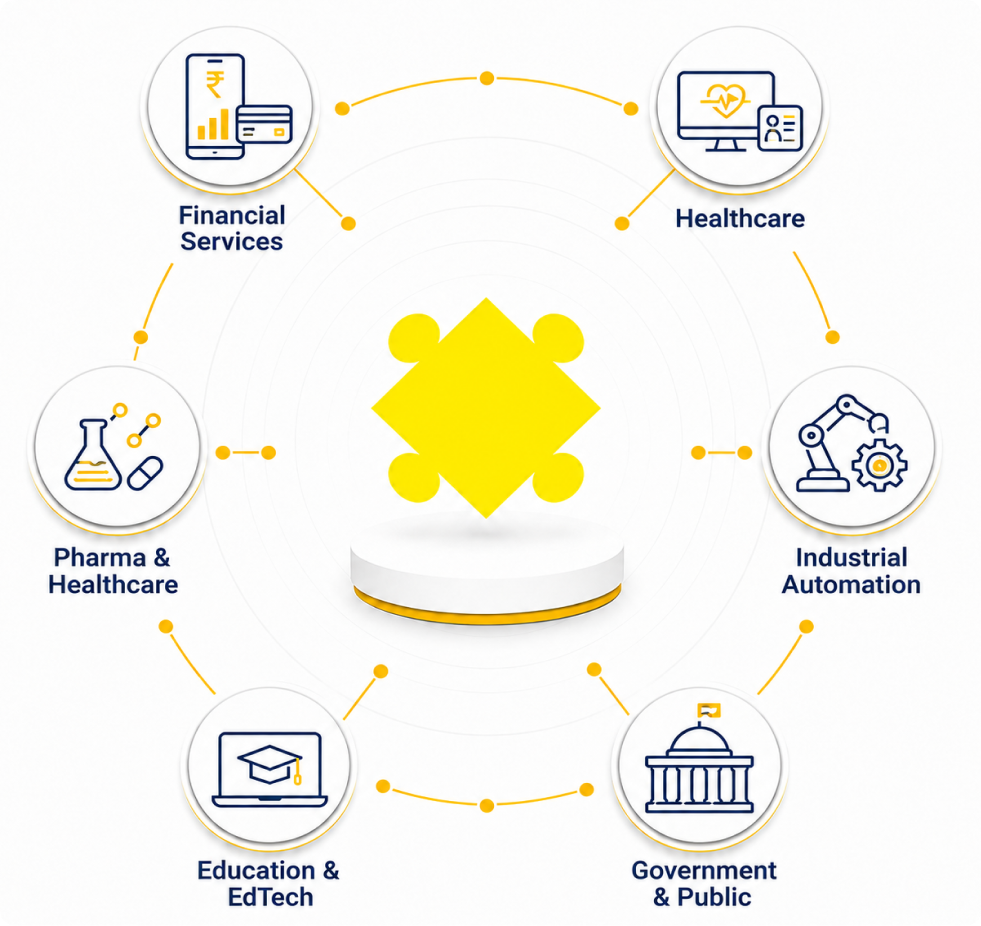
Financial Services

FinTech adoption, RegTech training, digital banking skills, and trading platform capability for customer-facing and back-office teams.

Healthcare

Clinical software adoption, digital health literacy, and electronic patient record system training for clinical and administrative staff.

Industrial Automation

Industrial automation software, ERP adoption, and digital twin training for production and engineering teams.

Government & Public

Digital government services, data management, and citizen-facing technology training for public sector organisations.

Education & EdTech

EdTech adoption, digital teaching skills, AI tools for educators, and virtual learning platform training.

Pharma & Healthcare

Clinical data systems, regulatory technology, and research platform adoption for scientific and clinical teams.

RELATED TRAINING TOPICS AND HOW CONSTELLAR BUILDS THEM

Other training topics from our Corporate Solutions range:

HOW WE BUILD IT:

Custom eLearning

The primary format for software adoption, AI literacy, and digital skills training - modular, role-based, AI-assisted in production.

Learning Consulting

For large-scale digital upskilling - start with a senior-led Training Needs Analysis to define what your people actually need to do differently.

Frequently asked questions

Yes. Vendor-provided tutorials demonstrate product features - they are not designed to build employee capability for specific job roles. Our senior instructional designers map the actual tasks and workflows your employees need to perform before a single module is built. AI-assisted tools then support content development at the scale enterprise technology programmes require.
Yes. AI literacy for non-technical audiences focuses on practical understanding - what AI tools can and cannot do, how to use them effectively and safely in their specific role, and what responsible use means in their context. Our senior IDs design AI literacy training that builds confidence and responsible AI use without requiring technical knowledge. Notably, Constellar uses AI-assisted production in our own work - so our understanding of responsible AI use in a professional context is genuinely practical, not theoretical.
Significantly. AI-assisted production tools are particularly relevant to technology skills training - they help us build realistic software simulations, develop scenario variants across multiple role types, keep modules current as software evolves, and produce training at the scale digital transformation programmes require. Senior IDs design the learning architecture, workflow accuracy, and instructional quality; AI accelerates production.
We design technology skills programmes as modular systems from the outset - individual modules can be updated independently when the software changes, without rebuilding the full programme. AI-assisted production makes updating specific modules fast and cost-effective. Senior IDs review every update for workflow accuracy before re-deployment.
AI literacy training requires role-specific design focused on practical, responsible use - what AI tools can and cannot do in a specific role, the risks of incorrect or irresponsible use, and the judgment required to use AI outputs appropriately. Generic digital skills training covers familiarity with features. AI literacy training builds capability and responsible judgment. Our senior IDs design the distinction into every module.

Ready to Build Technology Training That Produces Genuine Digital Capability? Let's Talk

Tell us about your technology skills challenge – the tools, the audience, and the capability gap you need to close. A senior instructional designer will respond with our honest assessment of the approach most likely to deliver the adoption and capability outcomes you need.